

Too often on Twitter we hear the words ‘Knowledge, good. Inquiry, bad’ as though there is only ever one way to skin a cat. The very notion of going against a Knowledge-Rich curriculum is presented as an absolute cardinal sin by some, who would have you think that you couldn’t possibly be an effective teacher if you weren’t delivering a knowledge-rich curriculum.
Indeed, when I worked in England 10 years ago, during what I might call the Knowledge Revolution and the early Michaela years, I absolutely threw myself (and the department I was leading at the time) whole-heartedly behind the knowledge agenda. I created retrieval ‘Do Nows’, introduced new material in small steps, bought in lots of deliberate practice, fell in love with booklets and used a lot of green pen (a lot of which I still do today).
And then I moved back abroad and back into the IB arena. This shifted my thinking slightly when I learnt about the importance the IB placed on conceptual learning and those bigger transferable ideas. I began to view effective teaching and learning as a triangulation between knowledge, skills and concepts with conceptual learning standing at the top of the triangle being supported by excellent knowledge and a good set of skills. I translated this conceptual approach down into both our IGCSE and KS3 curriculum.
Fast-forward six years and now, as the person leading on the implementation of the IB at my school, I find myself absolutely wanting to lead the IB as authentically as intended. This means embracing inquiry-based teaching amongst other things.
Inquiry-based teaching scares a lot of people – especially people recruited internationally from the UK who have been party to a Knowledge Rich only agenda. And yet, in considering how we become more inquiry-based in what we do, I really do feel that a balance can once again be found using simple, small shifts to our everyday practice without compromising on a focus on knowledge and skill development too.
Last week I delivered this lesson to Year 7.
1.Knowledge input – What is a symbol? Introducing a new term and offering a definition of the term suitable for Year 7 A2 ish English learners.
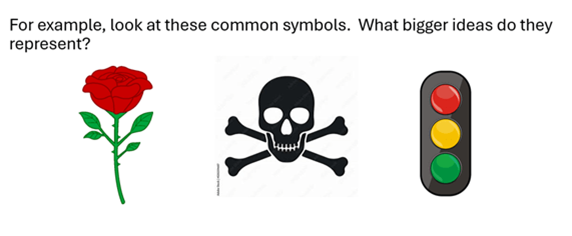
2. Modelled examples using I do, we do, you do using the key term ‘symbolise’ – rose, skull and cross bones and traffic light (interesting as that week, Vietnam had introduced fines for the first time for those going through a red traffic light!) Also did a ‘I say, you say’ for symbolize, clapping out the syllables.
3. Introduced the symbols from the myth we were reading and asked pupils to mix and match the objects with the bigger idea they thought they symbolized.
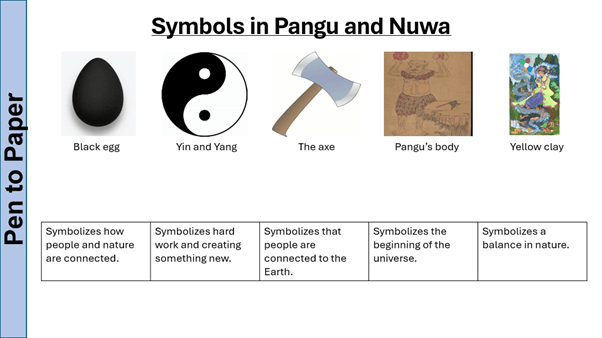
4. Used deliberate practice to translate the mix and match into sentences using the word ‘symbolise’ – e.g. The black egg symbolizes the beginning of the universe.
5. Introduced a structured inquiry – they are Y7 after all. Posed the question: what are some of the common symbols in Vietnamese mythology and what do they symbolize? I shared some of the common symbols I had found and pupils had to work in pairs to research what these objects symbolized for the Vietnamese people.
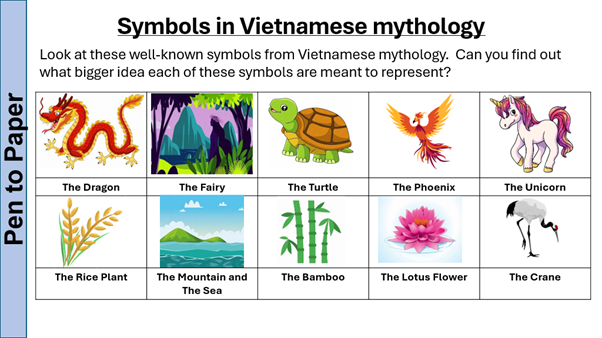
This activity saw pupils taking charge of their own learning. They were still working on developing their understanding of what a symbol is. The IB is big on local and global contexts so having explored the symbols in a myth from China, we were now exploring symbols that would mean something to the majority of my class and be part of their rich cultural heritage. Pupils were working together to research what each of the objects symbolized in Vietnamese mythology, discussing and sharing ideas. They developed reflection and critical thinking – some automatically gravitated towards ChatGPT and after conversations and guidance found more intellectual ways to research. Sometimes they had to consider multiple possibilities and conduct further research. At the end of this period, pairs had to feedback on what they had learnt, using our key vocabulary ‘symbolize’.
6. We then went into final consolidation and transference. Pupils had to summarise their understanding of symbols they had come across in their learning during the lesson BUT then had also use their understanding of the concept of a symbol to design symbols that would reflect the core values we hold at our school. (They came up with some brilliant designs!)
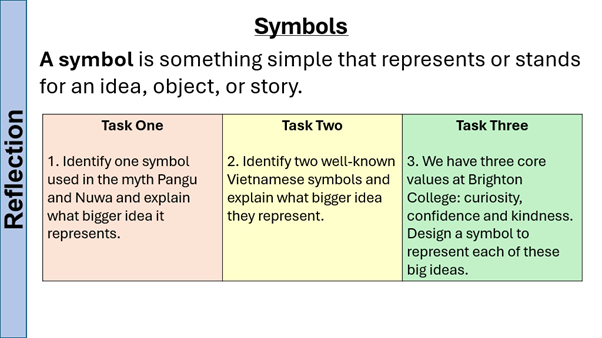
This lesson for me, was a really enjoyable one to teach and the pupils had fun with it too. They learnt core knowledge – What is a symbol? They were able to write sentences using the word ‘symbolise’ to link an object and the bigger idea it was representing but they also then moved into an inquiry, where they researched symbols related to their own culture before applying this knowledge to a new task in which they had to represent the big ideas of our core values through a symbol they designed.
For me, this lesson, was that happy blend of both worlds.
As always, I would love your thoughts.